Theory OneTwenty
CLIENT
Nomadic Studios
WORK TYPE
Brand Identity
Product Design
Web Design
ROLE
Founder
Product Designer
Strategist
YEAR
2025
Most wellness apps are built for people who already believe in wellness. Soft gradients, rounded fonts, gentle reminders. The whole category speaks the same language, to the same person, in the same tone. I wasn't interested in that. I was interested in the people who'd never touch any of it.
The observation was personal: the highest-performing periods of my life weren't about having more time. They were about perceiving time differently. Some days blurred past at 24 frames per second, reactive, automatic, decisions happening to you. Other days everything slowed. You'd notice things others missed. You'd respond instead of react. That difference felt trainable. OneTwenty was built to prove it.
The Challenge
I was traveling, working at pace, moving through time zones and back-to-back demands and somewhere in the middle of all of it I started to feel like I was falling behind myself. Not burned out. Not overwhelmed. Just blurred. Like I was reacting to life rather than actually living it. Days were passing, decisions were getting made, but the sharpness wasn't there. The presence wasn't there. And everything I looked at to fix it assumed the problem was stress or sleep or screen time. None of it named the real thing. That perception itself can go dull. That when you're always in motion, your frame rate drops. And that what you actually need isn't rest. It's a system to sharpen back up.
The Strategy
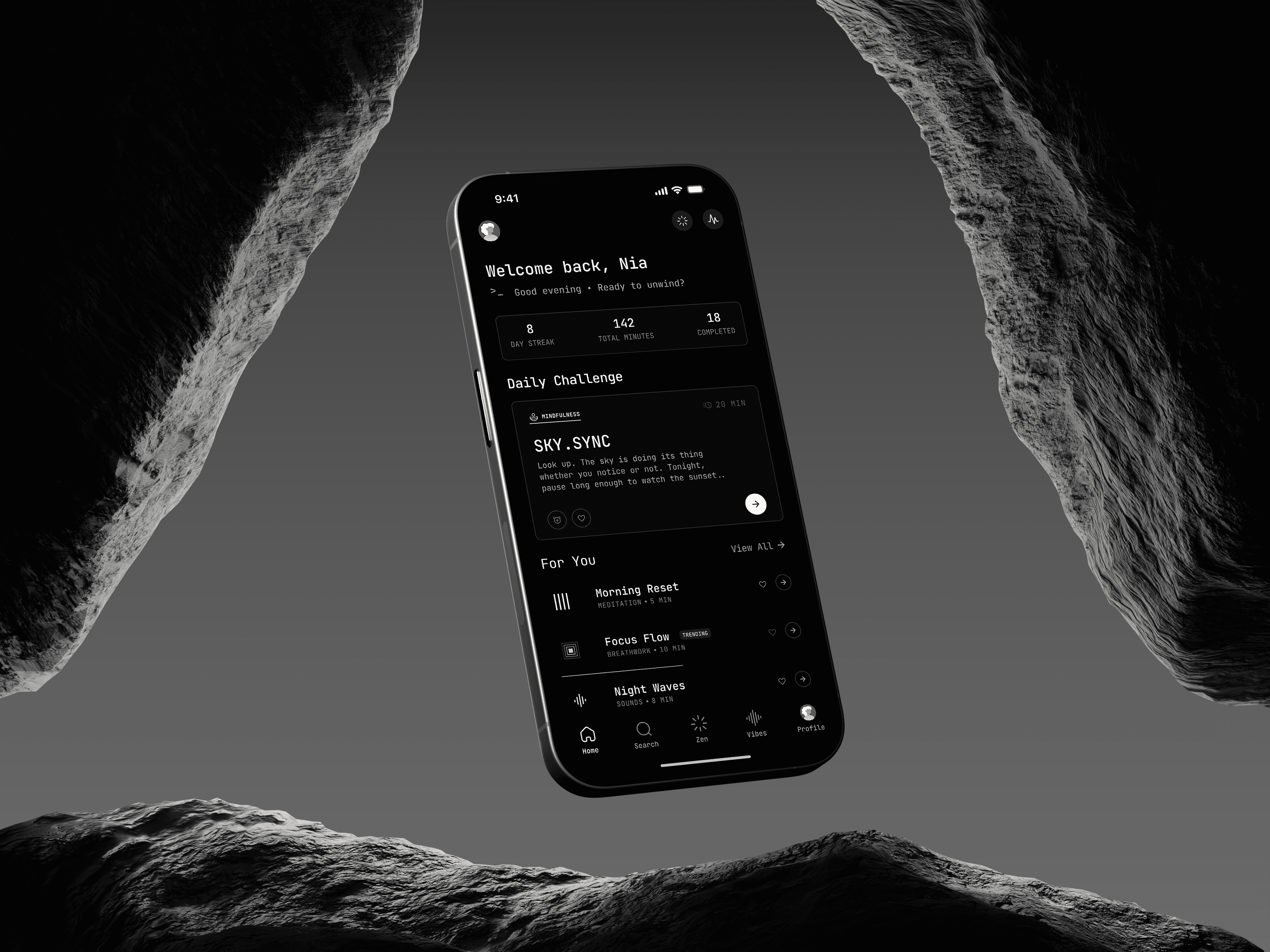
I committed to a single metaphor and followed it everywhere. Cameras operate at frame rates — 24 FPS is cinematic but blurred, 120 FPS is sharp, fast, responsive. Human perception works the same way. Most people are stuck at 24 FPS: reactive, distracted, decisions happening to them rather than by them. The app's job was to train users up the spectrum — 24 to 30 to 60 to 120 — through structured daily practice. Every design decision, every line of copy, every screen had to reinforce that framing. This wasn't a meditation app. It was a system reset. A personal firmware upgrade. The aesthetic followed: pure black, white only, JetBrains Mono throughout, and a terminal interface that made the whole thing feel like precision software rather than a wellness product. No pastels. No exceptions.
The Solution
I built the full ecosystem — alone, using this project as a deliberate opportunity to stress-test my creative process with new AI tools alongside the parts of the craft I needed to own myself. The brand identity. A complete Figma prototype spanning six core screens: Onboarding, Home, Session Player, Daily Challenge, Post-Session Completion, and Status Overlay. A live Framer website at onetwenty.xyz — cryptic, terminal-style, built to feel like an artefact rather than a landing page. A promotional video produced in Premiere and Jitter. A full pitch deck. A Flutter iOS prototype bringing the animated geometric breathing visualisations to life in actual code. And the exercise library — a structured table of "touch grass" practices across every category: breath work, movement, meditation, sensory awareness, environment — each one mapped to a stage in the FPS progression, from the Initiation firmware exercises a new user hits on day one, all the way to the habits of the Mastermind.
"Perceive More. React Less. Craft Your Own Speed"
THE FRAME RATE PHILOSOPHY
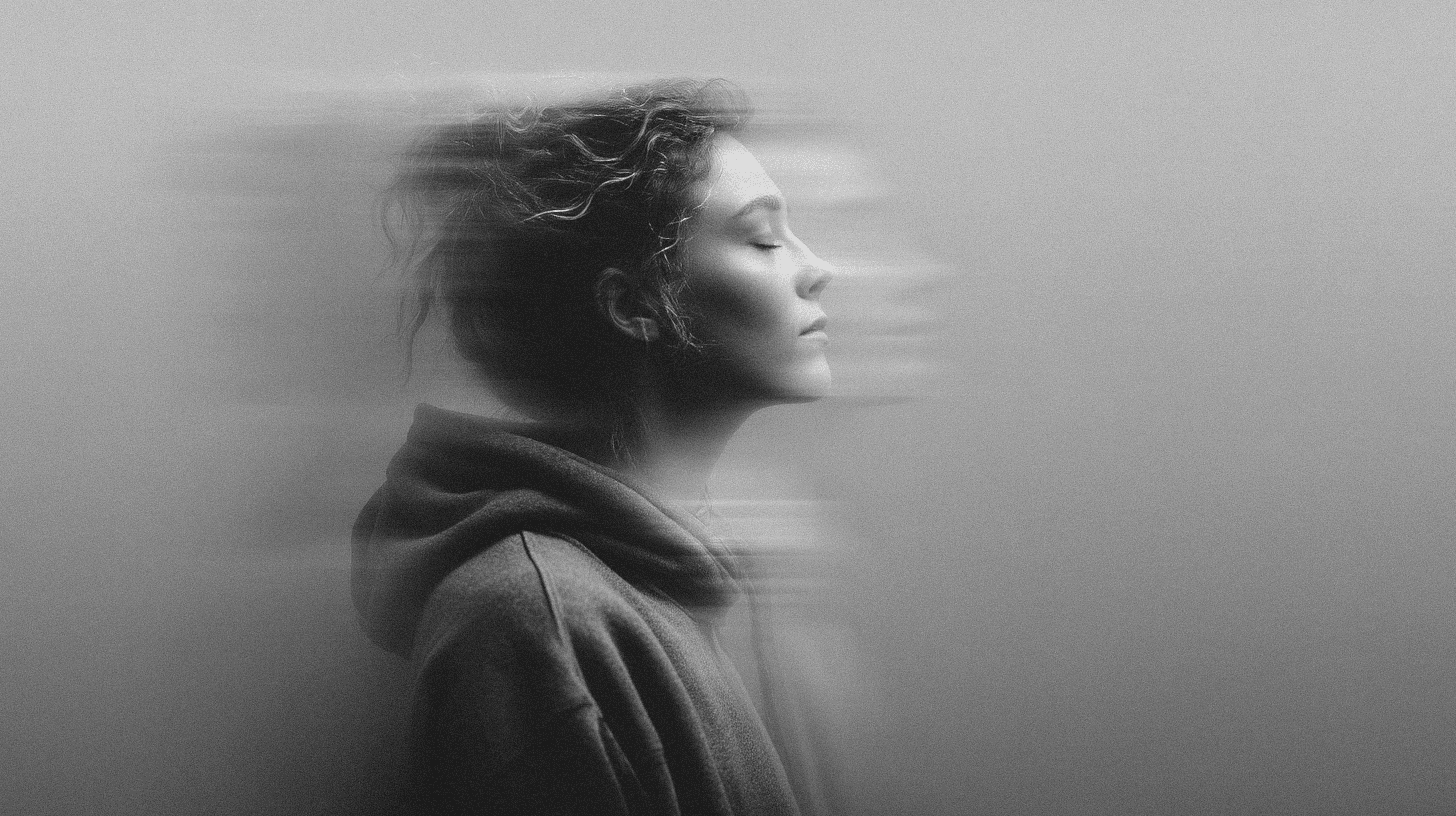
The concept was drawn directly from how cameras work. 24 FPS is standard for film. Smooth enough but motion blurs under pressure. 120 FPS is what high-performance cameras capture at. Everything sharpens. I mapped that spectrum onto human awareness and built four distinct levels: The Observer at 24, The Learner at 30, The Performer at 60, The Mastermind at 120. Each one has a name, a description, a set of habits, and a result.
Most people don't lack time. They lack resolution. The FPS metaphor did something no wellness framing had done before. It made the internal measurable. "I've been running at 24 all week" is more honest and more useful than "I've been stressed." It gave users a way to locate themselves on a spectrum, which meant they had something real to train toward. Not a vague goal. Not a streak. A journey with levels, landmarks, and a destination worth reaching.

THE EXERCISE LIBRARY
The touch grass library is a structured table of real-world practices built across every life pillar. Each exercise is mapped to a FPS level and designed to be done away from a screen. The Initiation firmware exercises are what a new user encounters first. They are the entry point into the system, chosen specifically to create immediate sensory awareness.
The exercises are the firmware. Every activity in the library was chosen because it forces you back into your body and your immediate environment. Away from the feed, into the actual world. That's not a wellness philosophy. That's a systems design decision. The app is the interface but the real upgrade happens outside of it, in the moments where you stop reacting and start noticing. That's where the frame rate actually changes.
THE AESTHETIC SYSTEM
Black background. White foreground. JetBrains Mono, one typeface across every screen. Breathing visualisations built from expanding concentric squares. UI copy written in terminal syntax, referencing system resets and firmware upgrades. The whole visual system was designed in Figma and carried without variation through every single touchpoint.
Traditional apparel design means waiting on samples or hand-rendering every iteration. We skipped that entirely. 18+ combinations tested in real time. Mood, style, and manufacturing specs all locked before touching a needle.
COLOR SYSTEM
Six colorways drawn from the historical colors of Cleveland sports teams, then aged with a fade and patina to capture the feeling of something worn-in. Each one mapped to something real in the city's identity.